


Table of contents
TrustScore 4.8 | 10,000+ customers
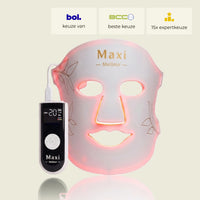
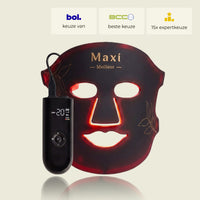

Red light therapy for sensitive, dry skin
Do you have dry, sensitive skin, or are you familiar with skin conditions such as eczema? Then you know how quickly your skin can react to new products and how important it is to be careful about what you use. More and more people with sensitive skin are discovering red light therapy as a gentle, non-invasive addition to their skincare routine, precisely because it contains no chemicals, heat or UV radiation.
Red light therapy is a method studied in the scientific literature in relation to skin conditions and radiance. Maxi Meilleur makes this technology accessible for home use with LED masks based on clinically studied wavelengths, personal guidance and honest expectations.
Important first: an LED mask is a cosmetic tool and not a medical treatment. If you are being treated for a skin condition such as eczema, we always advise consulting your dermatologist before you start with light therapy.
[banner-cta-1]
How does red light therapy help with dry, sensitive skin?
Sensitive, dry skin has specific needs. It reacts more quickly to stimuli, benefits more from gentle care and calls for an approach without aggressive ingredients. Red light therapy masks are a good fit for this: the light works on the surface layer of the skin without physical contact, without heat and without irritating ingredients.
Red light around 630 nm and near-infrared light around 850 nm are studied in the scientific literature for how they interact with the skin. Users with dry or sensitive skin describe skin that looks calmer, better cared for and more even with consistent use. These are cosmetic results, not medical claims. For persistent or severe skin complaints, it is always wise to consult a dermatologist.
What does the science say about red light therapy and skin conditions?
Wavelengths in the red and near-infrared spectrum have been extensively studied in relation to skin conditions and skin comfort (Avci et al., 2013). This research focuses on how specific wavelengths interact with skin tissue at different depths. These findings are interesting as background for the wavelengths used in LED masks.
It is essential to know that these studies were carried out in controlled clinical settings and are not directly transferable as evidence for a cosmetic home device. A LED mask from Maxi Meilleur is based on the same scientifically studied wavelengths, but is a cosmetic tool, not a medical device.
[product-cta-1]
Who is home red light therapy suitable for?
Red light therapy for home use is suitable for anyone who wants to work on the skin's radiance in a gentle, non-invasive way. Because the light contains no UV radiation and works contactlessly, it is an accessible addition to a skincare routine, also for people with sensitive skin.
There are, however, situations that call for caution. Do not use an LED mask or infrared mask on areas of skin with active rashes, open wounds or severe skin irritation. Always consult a doctor if you:
- Are under medical treatment for a skin condition such as eczema
- Use light-sensitive medication
- Are pregnant or breastfeeding
- Have epilepsy or a known light sensitivity
Maxi Meilleur communicates transparently about these safety instructions and refers you to a specialist when necessary.
[banner-cta-2]
How do you use an LED mask with sensitive skin?
Start gently. Begin with short sessions of 10 minutes on the lowest intensity setting and gradually build up the frequency and duration as your skin gets used to the light. Cleanse your face thoroughly before each session and afterwards apply a hydrating care product suited to your skin type.
For most users, a schedule of three to five sessions per week works best. Consistency is the key here, not intensity. If you are under medical treatment for eczema or another skin condition, always coordinate your schedule with your treating physician first.
[product-cta-2]
Choose red light therapy for sensitive skin with Maxi Meilleur
Maxi Meilleur offers LED masks based on wavelengths that have been extensively studied in the scientific literature, designed for safe cosmetic home use. From the entry-level model in the Nova Series to the premium Pro Series: with every mask you receive clear instructions, personal guidance and a 100% satisfaction guarantee.
We believe in transparency and honest expectations. An LED mask is a cosmetic addition to your skincare routine, not a replacement for professional medical advice. Discover the full range and choose the mask that suits your skin.
Sources
Avci, P., Gupta, A., Sadasivam, M., Vecchio, D., Pam, Z., Pam, N., & Hamblin, M. R. (2013). Low-level laser (light) therapy (LLLT) in skin: stimulating, healing, restoring. Seminars in Cutaneous Medicine and Surgery, 32(1), 41–52.
Jekal, S. J., Park, M. S., & Kim, D. J. (2017). The combined effects of curcumin administration and 630 nm LED phototherapy against DNCB-induced atopic dermatitis-like skin lesions in BALB/c mice. Korean Journal of Clinical Laboratory Science, 49(2), 150–160.
Kim, C. H., Cheong, K. A., & Lee, A. Y. (2013). 850 nm light-emitting-diode phototherapy plus low-dose tacrolimus (FK-506) as combination therapy in the treatment of Dermatophagoides farinae-induced atopic dermatitis-like skin lesions in NC/Nga mice. Journal of Dermatological Science, 72(2), 142–148.
Kim, C. H., Cheong, K. A., et al. (2016). Effects of low-dose light-emitting-diode therapy in combination with water bath for atopic dermatitis in NC/Nga mice. Photodermatology, Photoimmunology & Photomedicine, 32(1), 37–43.
Morita, H., Kohno, J., Tanaka, S., Kitano, Y., & Sagami, S. (1993a). Clinical application of GaAlAs 830 nm diode laser for atopic dermatitis. Laser Therapy, 5(2), 75–78.
Morita, H., Kohno, J., Hori, M., & Kitano, Y. (1993b). Clinical application of low reactive level laser therapy (LLLT) for atopic dermatitis. Keio Journal of Medicine, 42(4), 174–176. https://doi.org/10.2302/kjm.42.174
Frequently Asked Questions About Red Light Therapy for Sensitive Skin
Need help?
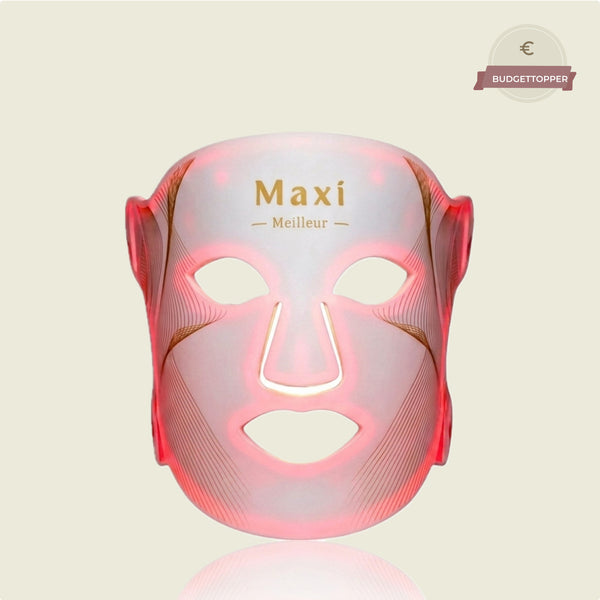
Nova Series - LED Mask White
- Entry-level model for high-quality LED therapy + 850 nm near infrared
- Simple routine for fresher and more even-toned skin
- Face + chin coverage
€129,00
Shop now
Save €30,00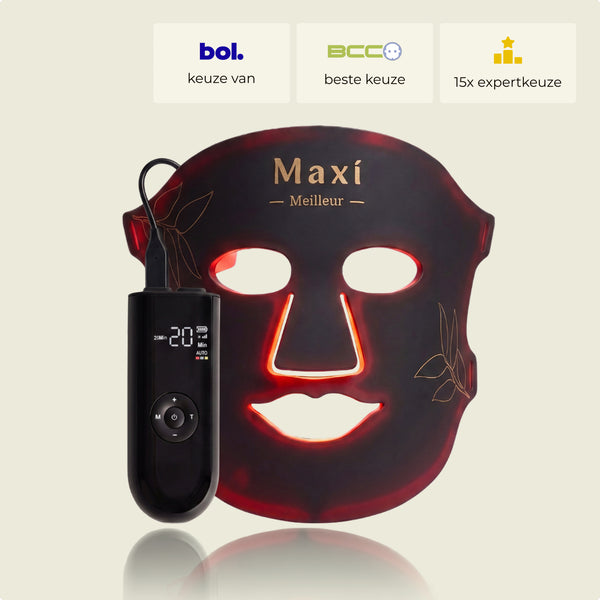
Pro Series - LED Mask
- Clinically & dermatologically tested by an independent lab
- High Density - Quattro LED chip technology + 850 nm near-infrared
- Face + chin coverage
€219,00€249,00
Shop now
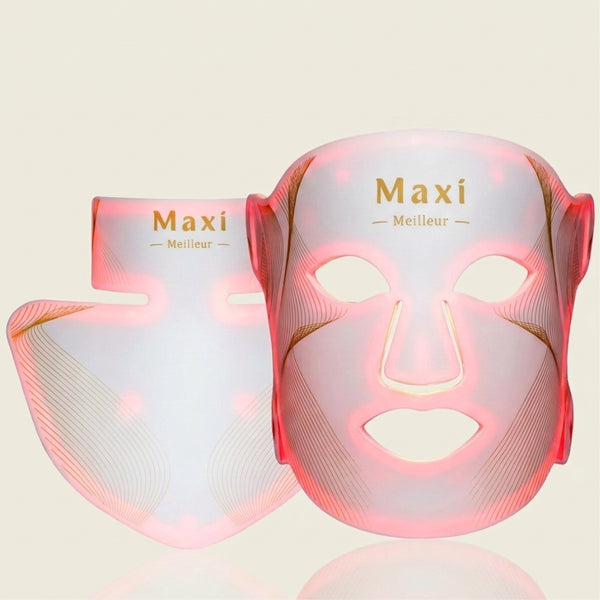
Nova Series - LED Mask White
- Entry-level model for high-quality LED therapy + 850 nm near infrared
- Simple routine for fresher and more even skin
- Face + neck + décolletage coverage
€229,00
Shop now
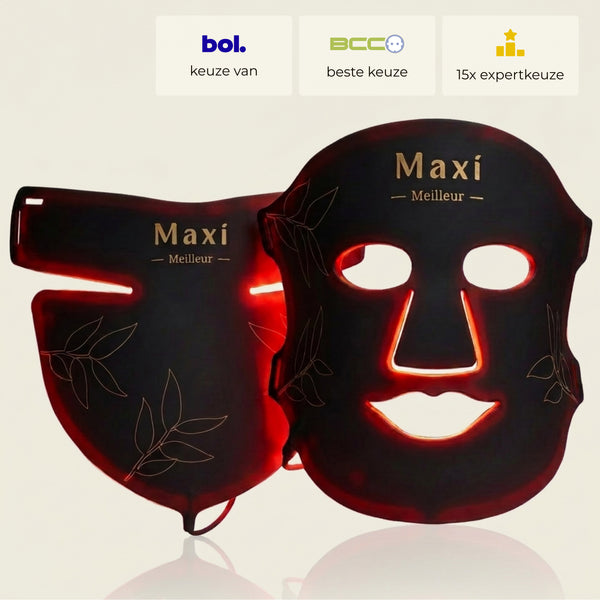
Pro Series - Full Glow Set Black
- Klinisch & dermatologisch getest door een onafhankelijk lab
- 680 High Density LEDs - Quattro LED-chip technologie + 850 nm nabij infrarood
- Gezicht + Hals + borst dekking
€339,00
Shop now


