

Table of contents
TrustScore 4.8 | 10,000+ customers

How often to use an LED mask?
In most cases, you use an LED mask an average of 3 to 5 times per week, with sessions of 15 minutes; start gently and build up your usage gradually over the first few weeks. This gives your skin the chance to get used to the light therapy and lets you discover, step by step, what works best for your skin condition.
The ideal frequency depends on your skincare goal, your skin type and your experience with LED therapy. Some women start with two sessions per week to support the skin barrier and then increase the intensity. Others opt for a consistent schedule of several treatments per week to more precisely target signs of ageing, blemishes or redness.
[banner-cta-1]What does an LED mask with light therapy do?
An LED mask uses specific light waves to support the skin cells in their natural condition and balance. Through red, blue, orange or near-infrared light, the skin is supported on different levels, without heat or UV radiation.
This form of light therapy, also known as photobiomodulation, works at a cellular level. Scientific literature describes how red and near-infrared light can influence cellular processes associated with skin balance and condition (Hamblin, 2017). This does not mean that an LED mask replaces medical treatments, but it does mean it can support the skin in its natural function.
Red light is often used to support the skin's structure and to visually soften fine lines. Blue light is mainly used for skin that is prone to blemishes, to give the complexion a calmer and clearer appearance. Orange light and near-infrared focus more on skin balance, circulation and recovery.
[product-cta-1]Is using an LED mask daily too often?
Using an LED mask daily should in principle be fine, provided you apply it correctly and tailor the intensity to your skin. LED light therapy is non-invasive and contains no UV radiation. When you choose to use it more frequently, you benefit from several advantages:
- Building blocks: regular exposure to red or near-infrared light can contribute to cellular processes associated with skin balance, which can help the skin support a firm and even appearance.
- Sensitivity to inflammation: red and blue light are studied in scientific literature in relation to skin balance. Through regular, short sessions the skin can look calmer and more even.
- No known cumulative damage: unlike UV light, there is no evidence that visible red or blue LED light causes cumulative skin damage when used correctly. Medical experts consider red light therapy safe for the skin under normal use, with generally mild and temporary side effects (Salamon, 2025).
Even so, this does not mean that more is always better. Intensity, session duration and your skin condition all play an important role. When you are just starting out with LED therapy, it is wiser to begin gently with a few times per week.
How often should you use an LED mask based on your skincare goal?
How often you should use an LED mask depends directly on your skincare goal. Skin that is actively working on anti-ageing calls for a different frequency than blemish-prone skin or skin that mainly needs calming and recovery. By tailoring the treatment frequency to your specific wish, you work more precisely and effectively towards long-term skin improvement.
Anti-ageing
If you want to support the skin in reducing fine lines and improving firmness, then 3 to 5 times per week with red light is a suitable guideline. Red light is associated in scientific literature with support for the visible appearance of the skin and a firmer look with consistent use (Wunsch & Matuschka, 2014). By scheduling several sessions per week, you stimulate the skin regularly without overloading it.
Blemish-prone skin
For blemish-prone skin, daily use can in many cases be desirable, especially when you use blue light. Consistency is essential here. By treating regularly, you work specifically towards a more even and calmer-looking complexion. If daily use feels too intense, you can start with 3 to 5 times per week and gradually increase this as your skin tolerates it well.
Calming and restoring the skin
If your skin is mainly sensitive, red or recovering after external influences, for example, then 2 to 3 times per week is often sufficient. The exact frequency depends on how unsettled your skin is at that moment. Mild redness can benefit from a few targeted sessions per week, while stable skin mainly needs maintenance. Listen carefully to signals such as tightness or warmth, and adjust the intensity and duration accordingly.
[banner-cta-2]Does how often you use an LED mask depend on your skin?
How often you use an LED mask certainly depends on your skin condition, sensitivity and experience with light therapy. Although LED mask colours therapy is generally safe and non-invasive, every skin responds differently to light stimulation. In some situations daily use is appropriate, while in other cases it is wiser to keep to a lower frequency.
- New users: when you are starting with an LED mask for the first time, it is wise to begin with 2 to 3 sessions per week. This allows your skin to get used to the stimulation of red, blue or infrared light. After that, gradually build up to 3 to 5 times per week, depending on your goal.
- Very sensitive skin: if you have thin, reactive skin that quickly turns red, then too-frequent exposure in the beginning can cause overstimulation. Opt for a lower intensity and shorter sessions. Observe how your skin responds before you increase the frequency.
- Listening to your skin: your skin gives signals. If your skin feels warm, tight or temporarily drier, that can mean you are being a little too intense. In that case, temporarily reduce the frequency or duration of the treatment. Consistency is more important than maximum intensity.
How often to use an LED mask per skin type
The ideal frequency of an LED mask differs per skin type and skin condition. What works well for mature skin can be too intense for skin that is prone to blemishes. By taking your skin type into account, you support the skin barrier and prevent unnecessary irritation. Below you will find a practical guideline to help you determine a suitable routine.
| Skin condition | Recommended frequency | Recommended product categories | Key points to consider |
| Sensitive skin | 1–2 times per week | Soothing hydrating formulas & light serums | Stop at redness or a burning sensation; lower the intensity if sensitivity occurs |
| Blemish-prone skin | 2–3 times per week (with an emphasis on blue light) | Purifying and restorative skincare | Start with a low intensity to avoid extra irritation + no aggressive serums |
| Dry/mature skin | 3–5 times per week (red light + near-infrared) | Intensely nourishing creams & barrier-repairing products | Hydrate extra after the treatment to support the skin barrier |
*These guidelines are not fixed rules, but a starting point. Factors such as stress, hormones, seasonal changes and your existing skincare can influence how your skin responds. By working consistently with a suitable frequency and the right support in your skincare routine, you get the most out of your LED treatment without throwing your skin off balance.
[product-cta-2]Conclusion on LED masks: how often to use them?
On average, you use an LED mask 3 to 5 times per week, for 15 minutes per session. In some situations daily use can be appropriate, provided your skin tolerates it well and you carefully tailor the intensity. Preferably start gently, build up gradually and match the frequency to your skincare goal and skin type. By treating regularly, you give your skin the chance to become stronger, more even and more resilient, step by step.
If you are looking for a reliable brand of premium LED mask for home use, then at Maxi Meilleur we have developed a quality-designed LED mask that is suitable for various skincare goals and skin types. With adjustable intensity, multiple light colours and personal guidance, we help you work towards long-term skin improvement in a safe and transparent way, right from home.
Sources:
Hamblin, M. R. (2017). Mechanisms and applications of the anti-inflammatory effects of photobiomodulation. AIMS Biophysics, 4(3), 337–361. https://www.ncbi.nlm.nih.gov/pmc/articles/PMC5523874/
Wunsch, A., & Matuschka, K. (2014). A controlled trial to determine the efficacy of red and near-infrared light treatment in patient satisfaction, reduction of fine lines, wrinkles, skin roughness, and intradermal collagen density increase. Photomedicine and Laser Surgery, 32(2), 93–100. https://www.ncbi.nlm.nih.gov/pmc/articles/PMC3926176/
Frequently asked questions about using an LED mask
Need help?
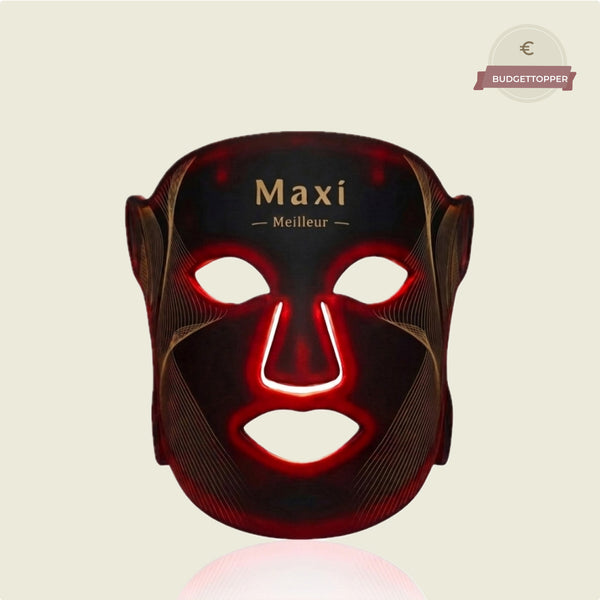
Nova Series - LED Mask Black
- Entry-level model for high-quality LED therapy + 850 nm near infrared
- Simple routine for fresher and more even-toned skin
- Face + chin coverage
€129,00
Shop now
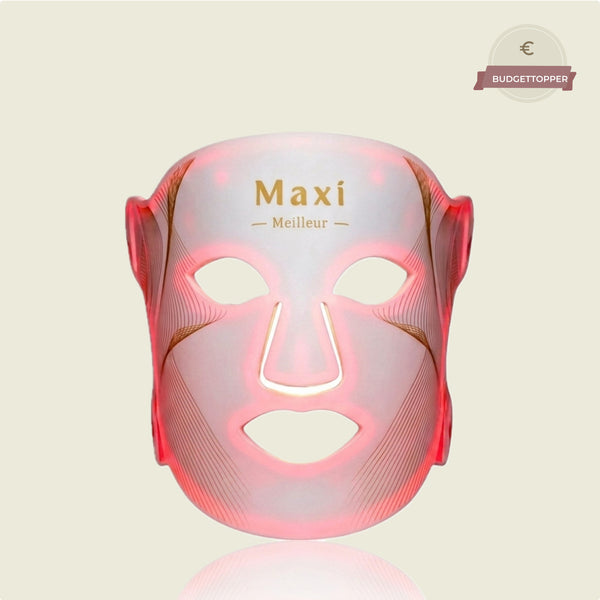
Nova Series - LED Mask White
- Entry-level model for high-quality LED therapy + 850 nm near infrared
- Simple routine for fresher and more even-toned skin
- Face + chin coverage
€129,00
Shop now
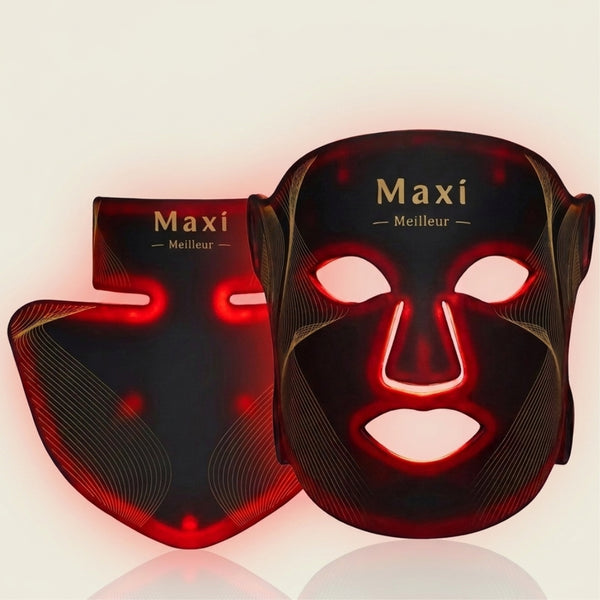
Nova Series - LED Mask White
- Entry-level model for high-quality LED therapy + 850 nm near infrared
- Simple routine for fresher and more even skin
- Face + neck + décolleté coverage
€229,00
Shop now
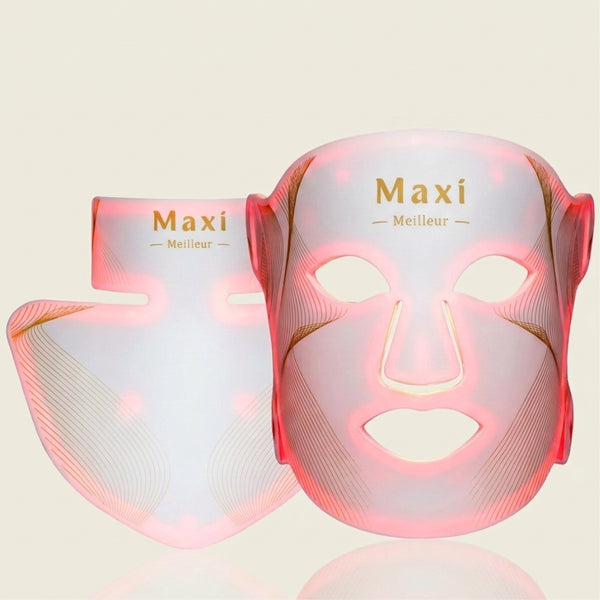
Nova Series - LED Mask White
- Entry-level model for high-quality LED therapy + 850 nm near infrared
- Simple routine for fresher and more even skin
- Face + neck + décolletage coverage
€229,00
Shop now
Save €30,00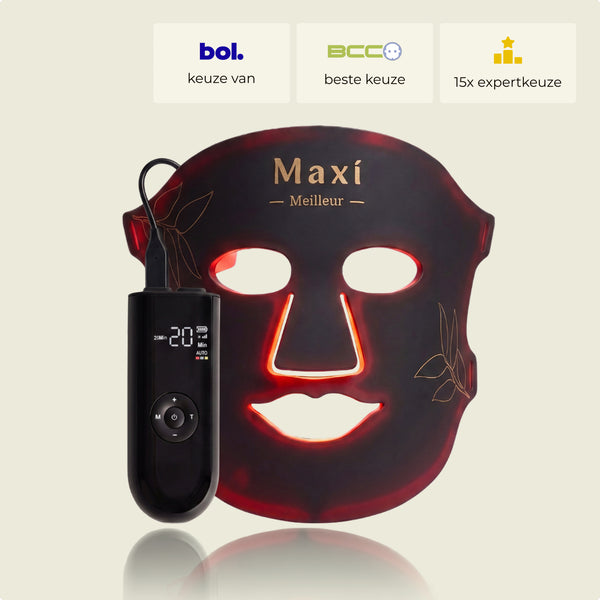
Pro Series - LED Mask
- Clinically & dermatologically tested by an independent lab
- High Density - Quattro LED chip technology + 850 nm near-infrared
- Face + chin coverage
€219,00€249,00
Shop now
Save €30,00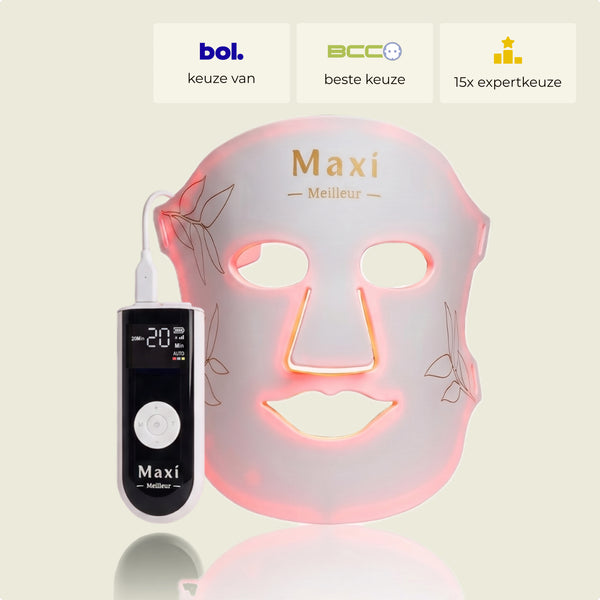
Pro Series - LED Mask White
- Clinically & dermatologically tested by an independent lab
- High Density - Quattro LED chip technology + 850 nm near-infrared
- Face + chin coverage
€219,00€249,00
Shop now
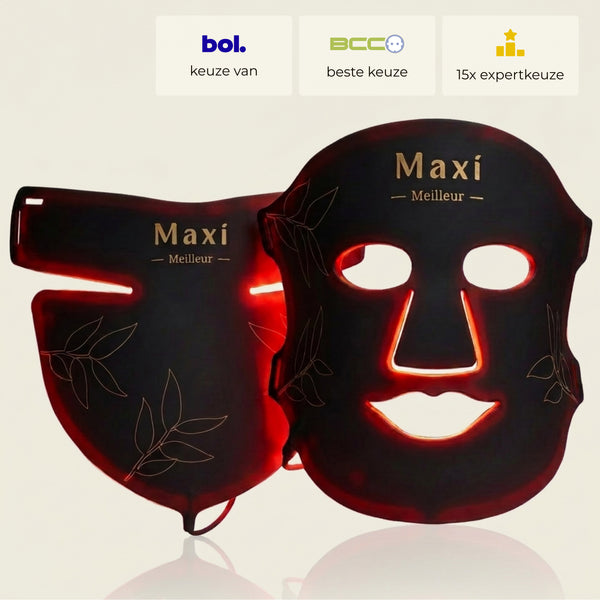
Pro Series - Full Glow Set Black
- Klinisch & dermatologisch getest door een onafhankelijk lab
- 680 High Density LEDs - Quattro LED-chip technologie + 850 nm nabij infrarood
- Gezicht + Hals + borst dekking
€339,00
Shop now
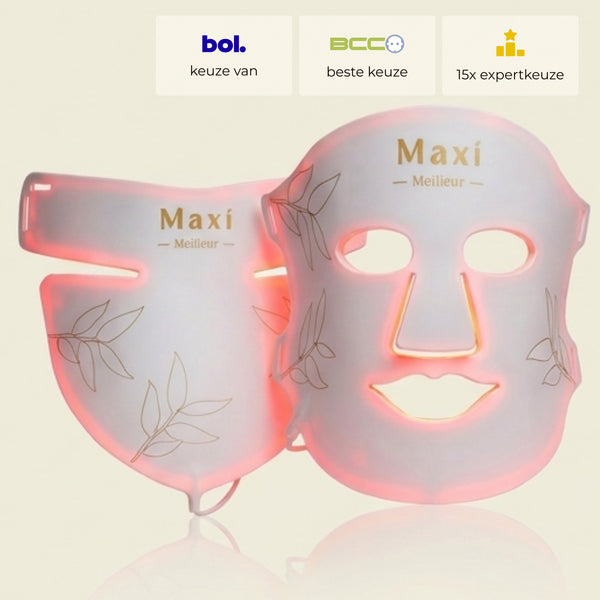
Pro Series - Full Glow Set White
- Clinically & dermatologically tested by an independent lab
- 680 High Density LEDs - Quattro LED chip technology + 850 nm near-infrared
- Face + Neck + chest coverage
€339,00
Shop now


