


Red light therapy for scars
Scars are part of skin that has healed itself after a pimple, a small wound or a procedure, but they can strongly shape the image you see in the mirror. A mark left behind after acne, a red line or an uneven patch of skin: these are exactly the scars you notice every day. That is why more and more people are looking at red light as a gentle, non-invasive way to support the appearance of their scars, without aggressive treatments or procedures.
At Maxi Meilleur we believe in honest expectations. An LED mask is a cosmetic beauty tool for home use and not a medical treatment, which means we are talking about how your scars look and how your skin feels, not about healing a scar. In this article you will learn what scars are, what research says about red light and scars, and what you can realistically expect when you use red light on scars.
[banner-cta-1]
How scars form and why they stand out
A scar forms when the skin rebuilds itself after damage. In the process, the body produces new connective tissue, which often looks different from the surrounding skin: sometimes a little thicker, sometimes more like a small pit, and often with a different colour or texture. That difference in texture and tone is precisely why a scar stands out. Before you use red light on scars, it helps to understand the method, and for that our overview of the workings of red light therapy is a good introduction.
Not every scar looks the same, and that partly determines what you can expect from it. These are the types you most often come across on and around the face:
- Acne scars (atrophic): small pits or dents left behind in the skin after a period of acne.
- Post-acne marks: red or brown discolourations that remain after a pimple has healed.
- Hypertrophic scars: thickened, often red scars that stay within the original wound edges.
- Keloids: scars that grow beyond the original wound.
- Surgical scars: straight lines left behind after a procedure.
An LED mask focuses on the appearance of the skin and is therefore especially interesting for superficial scars such as acne scars and post-acne marks. Thickened scars, keloids and surgical scars often lie deeper and call for a different approach, so you adjust your expectations accordingly.
What research says about red light and scars
Red light therapy uses specific wavelengths, usually red light around 630 to 660 nm and sometimes near-infrared light that penetrates deeper into the skin. In the scientific literature, these wavelengths are absorbed by structures in the skin cells, after which processes are set in motion that are associated with skin renewal (De Freitas & Hamblin, 2016).
Important to emphasise: this is about what researchers write about the wavelengths, not about a promise that a device will tackle your scar. Specifically for scars, it is interesting that red and near-infrared wavelengths are studied in the dermatological literature in relation to, among other things, the appearance of acne scars and thickened scars (Avci et al., 2013).
Which wavelength best suits which type of scar and how deep the light reaches differs per colour. You can read more about this in our explanation of the wavelength of LED light, so that here we can stay close to the scar angle.
[product-cta-1]
What you can realistically expect with scars
Red light is not a miracle cure and it does not make a scar disappear overnight. What many users do experience is that after a few weeks their skin looks more even, fresher and smoother, making scars and marks less noticeable. Research into red and near-infrared light showed, for example, improvements in skin roughness and in the overall appearance of the skin (Wunsch & Matuschka, 2014). A more even skin tone and a smoother texture push scars visually into the background.
Consistency matters more here than intensity. Just as with skincare, the effect builds up gradually, and it helps to take a weekly photo of your scar in the same light so that you assess change more objectively than with the naked eye. If you want an honest picture of what others noticed with their scars, take a look at the before and after results and the experiences with red light. We give a realistic impression of the timeline in our piece on the results of an LED mask.
It also helps to know how red light compares to other routes for scars. Treatments such as microneedling, laser or a chemical peel work more intensively and in a number of sessions, but are also more invasive, more expensive and sometimes involve recovery time. A scar or silicone cream mainly supports the suppleness of the scar. Red light positions itself in between as the gentle, non-invasive option that you use at home and at your own pace, aimed at the appearance of your scars over the long term.
Red light for acne scars and post-acne marks
Acne scars and post-acne marks are probably the most common reasons why people consider an LED mask for scars. After a period of pimples, the skin often remains uneven: red or brown marks, a coarser texture and here and there a small pit. An LED mask is designed as a complement to your skincare routine and can help make your skin look more even and calmer, so that those acne scars draw less attention.
Many masks combine red light with other colours, because each wavelength has its own angle when it comes to scars and imperfections. What those colours mean and what they are used for is something we explain in our article on LED mask colours. If, alongside the scars, you also have active pimples, then an LED mask against pimples is a logical starting point to include in the same routine.
Using red light safely on scars
Safety comes first with us, certainly when it comes to scars. Never start on an open or not yet fully closed wound: wait until the scar is completely closed before using an LED mask on it. An LED mask is a cosmetic addition and not a replacement for medical care. If you have a fresh scar after surgery, a keloid or a scar you are worried about, first consult your GP or dermatologist before getting started with it.
The LED masks themselves work with low heat development and feel comfortable on the skin for most people. Still, red light is not suitable for everyone, not even with scars. If you use certain medication or have a light-sensitive condition, first read up on which situations call for extra caution in our overview of who should not use a red light mask. When in doubt, the rule is always: check with a professional.
[banner-cta-2]
How to use an LED mask on scars
If you want to use red light for the appearance of your scars, you get the most out of a fixed, calm approach in which the light actually reaches the zone with the marks. How often you schedule a session depends on your skin and your scars: in our explanation of the frequency of your LED mask and the do's and don'ts of use you can read about this in detail. The step-by-step plan below keeps it simple.
Step 1: start with clean skin
Cleanse your face and pat it dry, so that there is no make-up or dirt between the light and your scars. Clean skin is the best starting point and prevents skincare residue on the marks from getting in the way.
Step 2: take your time for your session
Put on the mask comfortably so that it fits closely against the zones with scars, and stay seated or lying down for a while. Keep your sessions short and regular rather than long and sporadic, because with scars consistency determines the result more than the duration of a single time.
Step 3: finish up and track your progress
After the session, apply your usual serum or moisturiser and schedule your next moment. Take a weekly photo of your scar in the same light, so that you can properly follow the gradual change in texture and appearance.
This way red light becomes a small, calm moment in your day rather than a complicated project. It is precisely that regularity that makes the difference over the long term for how visible your scars are.
[product-cta-2]
Which LED mask suits your scars
Which version suits you best depends on where your scars are and what your wishes are. Our LED facial mask for home use covers the entire face and is available as the accessible Nova Series for those who want to start gently with scars, and as the more extensive Pro Series for those who want more. Both are a comfortable, wearable beauty tool for your own routine.
If the scars or marks are also on your neck or on your décolleté, for example after acne in those zones, then an LED mask for the décolleté is a nice addition. This way you include your face and those scars in one fixed routine, rather than approaching them separately.
Getting started with red light on scars
Scars require patience, and an honest story is part of that: red light does not make them disappear, but it can help your skin look more even and fresher, so that your scars stand out less. The gain lies in the regularity and in realistic expectations, not in big promises.
At Maxi Meilleur you get, alongside a high-quality LED mask, clear guidance and aftercare. So you are not only buying a product, but you also receive support that helps you calmly and confidently on your way to skin in which your scars play less of a leading role.
Sources
The sources below are about red and near-infrared light in general and about the wavelengths and mechanisms studied. They do not relate to a specific product and are not proof of the effectiveness of an individual LED mask.
Avci, P., Gupta, A., Sadasivam, M., Vecchio, D., Pam, Z., Pam, N., & Hamblin, M. R. (2013). Low-level laser (light) therapy (LLLT) in skin: stimulating, healing, restoring. Seminars in Cutaneous Medicine and Surgery, 32(1), 41-52. https://pubmed.ncbi.nlm.nih.gov/24049929/
de Freitas, L. F., & Hamblin, M. R. (2016). Proposed mechanisms of photobiomodulation or low-level light therapy. IEEE Journal of Selected Topics in Quantum Electronics, 22(3), 7000417. https://doi.org/10.1109/JSTQE.2016.2561201
Wunsch, A., & Matuschka, K. (2014). A controlled trial to determine the efficacy of red and near-infrared light treatment in patient satisfaction, reduction of fine lines, wrinkles, skin roughness, and intradermal collagen density increase. Photomedicine and Laser Surgery, 32(2), 93-100. https://doi.org/10.1089/pho.2013.3616
Frequently Asked Questions About Red Light Therapy and Scars
Need help?
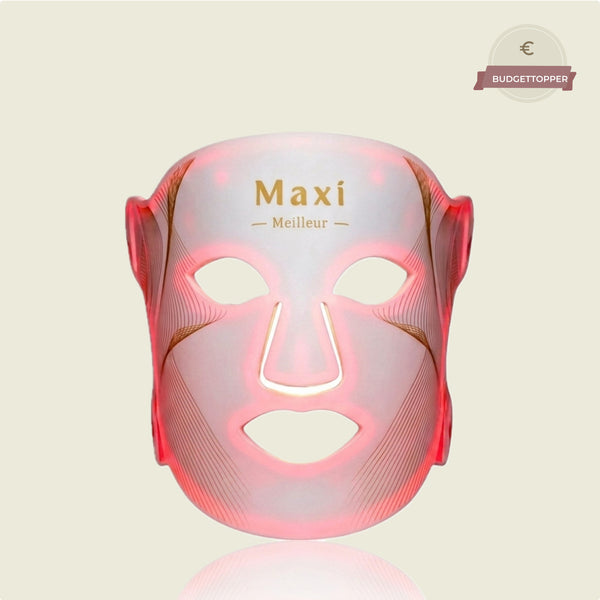
Nova Series - LED Mask White
- Entry-level model for high-quality LED therapy + 850 nm near infrared
- Simple routine for fresher and more even-toned skin
- Face + chin coverage
€129,00
Shop now
Save €30,00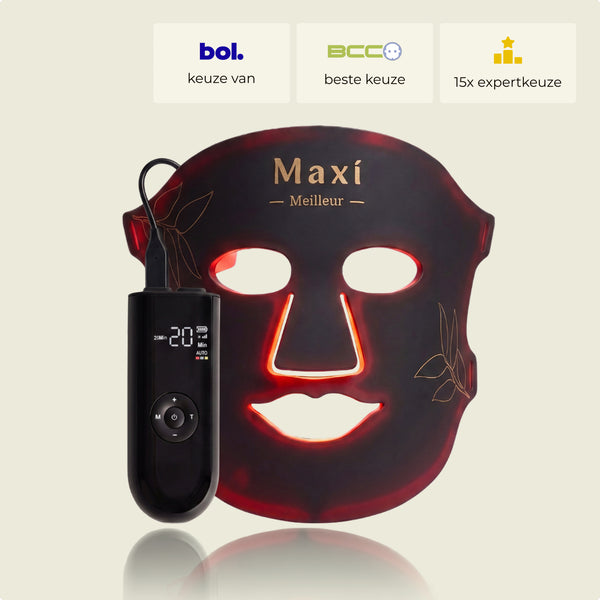
Pro Series - LED Mask
- Clinically & dermatologically tested by an independent lab
- High Density - Quattro LED chip technology + 850 nm near-infrared
- Face + chin coverage
€219,00€249,00
Shop now
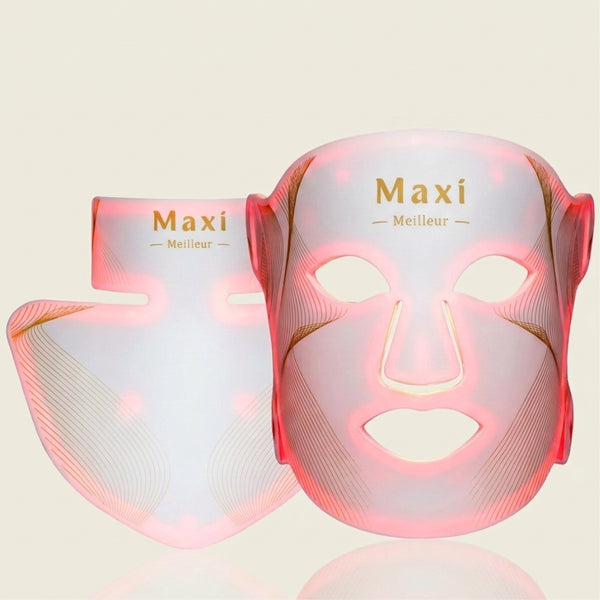
Nova Series - LED Mask White
- Entry-level model for high-quality LED therapy + 850 nm near infrared
- Simple routine for fresher and more even skin
- Face + neck + décolletage coverage
€229,00
Shop now
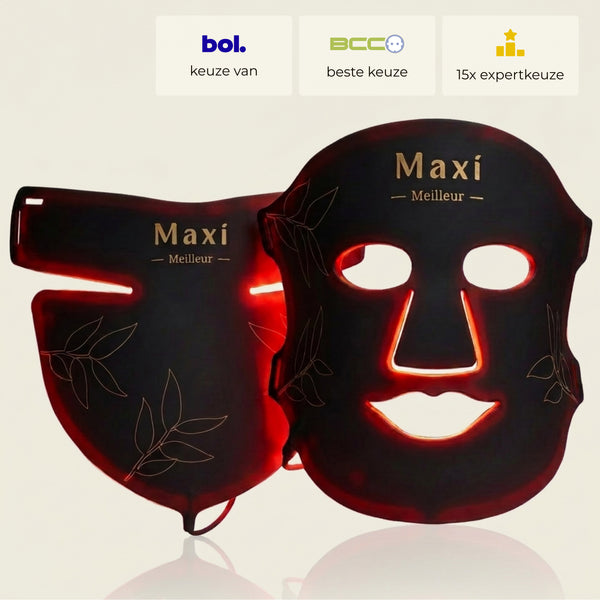
Pro Series - Full Glow Set Black
- Klinisch & dermatologisch getest door een onafhankelijk lab
- 680 High Density LEDs - Quattro LED-chip technologie + 850 nm nabij infrarood
- Gezicht + Hals + borst dekking
€339,00
Shop now


