


Table of contents
TrustScore 4.8 | 10,000+ customers

Which Wavelength of LED Light Works Best for Your Skin?
No, red light therapy and infrared therapy are not the same, even though the terms are regularly used interchangeably. That is understandable: both are forms of light therapy and work via the electromagnetic spectrum. Yet there is a clear and important difference between the two, namely in wavelength and depth of penetration.
Red light is visible to the eye and works mainly on the upper layers of the skin. Infrared light is non-visible and penetrates deeper into the body. For anyone who wants to know which therapy best matches their own goal, it helps to understand how both forms of light therapy work and what they can mean for your skin or recovery.
[banner-cta-1]
What is red light therapy?
Red light therapy is a non-invasive treatment in which the skin is exposed to light with a wavelength of roughly 620 to 700 nanometres. This light falls within the visible spectrum and has a characteristic red colour. Because it is visible, you can see exactly which zone is being treated during a session.
At the cellular level, red light therapy works through a process known as photobiomodulation. The light can stimulate the mitochondria in the skin cells, which in research is linked to the production of cellular energy. That cellular activity can contribute to an improved skin condition and a visibly more even appearance. Scientific research describes how photobiomodulation with red light can influence cellular processes associated with skin balance (Hamblin, 2017).
Red light therapy works mainly at the surface, which makes it exceptionally well suited to skin-focused goals. Think of supporting a more even complexion, softening the appearance of fine lines, improving skin texture and a fresher skin appearance. Because the treatment is targeted and safe for home use, it is a popular choice for people who want to deepen their skincare routine in a natural way.
What does infrared therapy do?
Infrared therapy uses light with a wavelength above 700 nanometres. This light falls outside the visible spectrum: you feel the warmth, but you do not see the light itself. That is immediately one of the most striking characteristics of infrared. It is non-visible, yet noticeably present.
Within infrared therapy, a distinction is made between near-infrared (also called NIR or near-infrared, around 700 to 1400 nm) and far infrared (above 1400 nm, such as in an infrared sauna). Near-infrared light penetrates deeper into the tissue than red light and reaches muscles, joints and deeper cell layers. In therapeutic contexts such as physiotherapy, infrared is studied for applications focused on muscles and joints (Wunsch & Matuschka, 2014).
Infrared therapy is widely used in therapeutic contexts, such as physiotherapy and sports medicine, but also in wellness applications such as infrared saunas. The warming action and the relaxing effect on muscles are properties that many users report. Infrared light influences cellular processes on a deeper level than red light, which makes it suitable for goals that go beyond just the outer layers of the skin.
[product-cta-1]
What is the difference between red light therapy and infrared?
The core difference between red light therapy and infrared lies in the wavelength and the associated depth of penetration. Those two factors largely determine which tissues are reached and which therapeutic applications are appropriate. In the table below, you can see the most important differences at a glance.
|
Characteristic |
Red light therapy |
Infrared therapy (near-infrared) |
|
Wavelength |
620 to 700 nm |
700 to 1400 nm |
|
Visibility |
Visible (red colour) |
Non-visible to the eye |
|
Depth of penetration |
Superficial (skin and epidermis) |
Deep-acting (muscles, joints, deeper tissue) |
|
Sensation of warmth |
Minimal or no warmth |
Noticeable warmth |
|
Primary application |
Skin improvement, visible skin improvement and a fresher complexion |
Muscle recovery, pain relief, circulation |
|
Devices used |
LED mask, panel, lamp |
Infrared panel, infrared sauna, NIR lamp |
Both forms of light therapy have their own therapeutic value and work via the same principle: light acts on cellular processes through photobiomodulation. Yet they clearly differ in application. Red light therapy is focused on the skin and is therefore the better choice for skin-focused goals. Infrared therapy targets deeper tissue layers and is used in professional contexts for muscle- and joint-related applications. The choice therefore depends entirely on what you want to achieve.
[banner-cta-2]
What should you consider when choosing between red light and infrared?
If you want to make a deliberate choice between red light therapy and infrared therapy, it helps to consider a number of concrete points. Both treatments have their own action and area of application, and the best choice depends on your personal goal and situation.
- Your goal: do you want to work on skin improvement, a more even complexion or reducing fine lines? Then red light therapy is the most targeted choice. Is your focus on muscle recovery, pain relief or a deeper warming effect? Then infrared therapy better matches your needs.
- The wavelength of the device: always check which wavelength a device uses. Red light works around 630 nm, near-infrared around 850 nm. Some devices, such as certain LED masks, combine both wavelengths for a broader biostimulating effect.
- Depth of penetration: do you need a treatment that supports the skin superficially, or do you want to work deeper into the tissue? Red light reaches the upper layers of the skin, infrared penetrates into muscles and joints.
- Safety and suitability: red light therapy via a certified LED mask is generally safe for home use. Infrared devices, especially in the higher power classes, sometimes call for more caution. Look for CE and RoHS certifications as an indication of quality and safety (Salamon, 2025).
- Consistency and ease of use: the results of light therapy are strongly linked to consistent use. Choose a device and treatment method that you can easily fit into your daily routine, so that you can keep up the treatment over the long term.
- Combination options: some LED masks combine red light with near-infrared light. That gives you the advantage of both worlds: superficial skin support and a deep-acting effect at the cellular level.
The choice between red light therapy and infrared does not have to be a complicated trade-off. If your primary goal is skin improvement, then you already know enough: red light therapy is the most targeted choice for you. If you also want to support deeper recovery processes, then a device that combines both wavelengths is a smart investment.
[product-cta-2]
LED masks with red light and infrared
Now that you know how red light therapy and infrared therapy differ from each other, you also understand why a good LED mask is more than just a nice device. It comes down to the right wavelengths, the right intensity and a consistent routine that supports your skin over time. At Maxi Meilleur you will find LED masks that are specially developed for effective home use, with red light for visible skin improvement and near-infrared for a deep-acting biostimulating effect at the cellular level.
Maxi Meilleur stands for transparency, quality and personal guidance. Our masks are CE and RoHS certified and designed to support long-lasting results, not as a quick fix, but as part of a considered skincare routine. Discover our range and take the first step today towards healthier, radiant skin.
Sources:
Hamblin, M. R. (2017). Mechanisms and applications of the anti-inflammatory effects of photobiomodulation. AIMS Biophysics, 4(3), 337–361. https://www.ncbi.nlm.nih.gov/pmc/articles/PMC5523874/
Salamon, M. (2025, October 21). Red light therapy for skin care. Harvard Health Publishing.https://www.health.harvard.edu/staying-healthy/red-light-therapy-for-skin-care
Couturaud, V., Le Fur, M., Pelletier, M., & Granotier, F. (2023). Reverse skin aging signs by red light photobiomodulation. Skin Research and Technology, 29, e13391. https://doi.org/10.1111/srt.13391
Wunsch, A., & Matuschka, K. (2014). A controlled trial to determine the efficacy of red and near-infrared light treatment in patient satisfaction, reduction of fine lines, wrinkles, skin roughness, and intradermal collagen density increase. Photomedicine and Laser Surgery, 32(2), 93–100. https://www.ncbi.nlm.nih.gov/pmc/articles/PMC3926176/
Frequently Asked Questions (FAQ)
Need help?
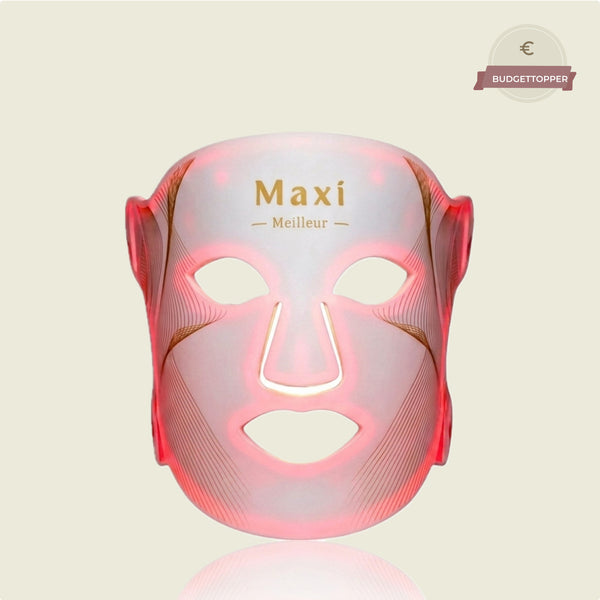
Nova Series - LED Mask White
- Entry-level model for high-quality LED therapy + 850 nm near infrared
- Simple routine for fresher and more even-toned skin
- Face + chin coverage
€129,00
Shop now
Save €30,00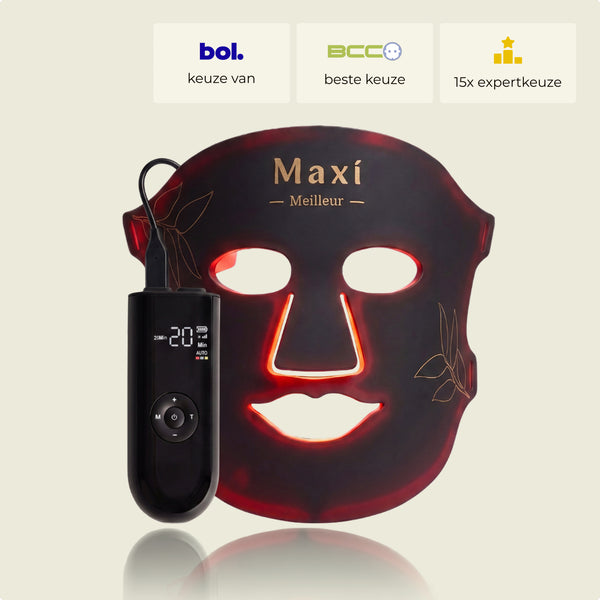
Pro Series - LED Mask
- Clinically & dermatologically tested by an independent lab
- High Density - Quattro LED chip technology + 850 nm near-infrared
- Face + chin coverage
€219,00€249,00
Shop now
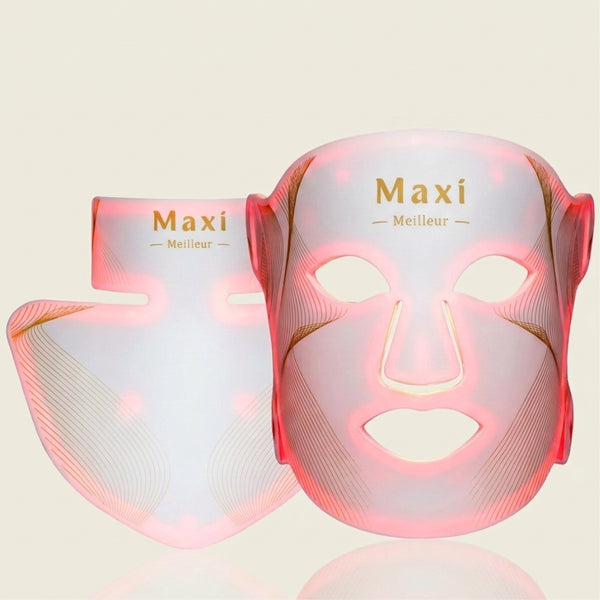
Nova Series - LED Mask White
- Entry-level model for high-quality LED therapy + 850 nm near infrared
- Simple routine for fresher and more even skin
- Face + neck + décolletage coverage
€229,00
Shop now
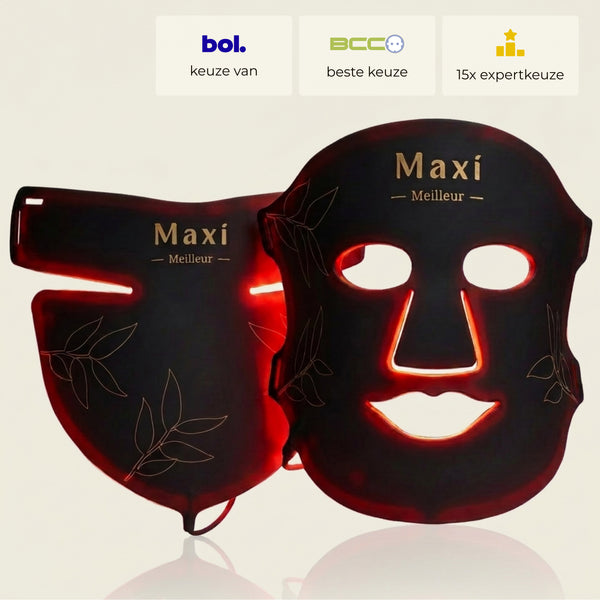
Pro Series - Full Glow Set Black
- Klinisch & dermatologisch getest door een onafhankelijk lab
- 680 High Density LEDs - Quattro LED-chip technologie + 850 nm nabij infrarood
- Gezicht + Hals + borst dekking
€339,00
Shop now


