


Table of contents
TrustScore 4.8 | 10,000+ customers
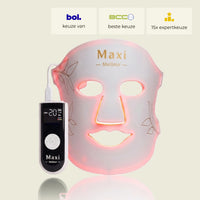
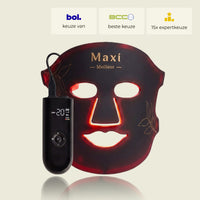

Who is not allowed to wear a red light mask?
For many women, a red light mask is an accessible, non-invasive way to support their skin in a natural way. Even so, it is important to know that LED light therapy is not automatically suitable in every situation. Although red light is described in scientific literature as a safe form of photobiomodulation without UV radiation, and is generally well tolerated by the skin, there are certain circumstances in which extra caution is needed.
Your skin is a living organ with its own balance, condition and sensitivity. Factors such as skin that is temporarily extra sensitive or irritated, the use of medication or neurological sensitivity can all influence how your skin responds to light stimulation. In some cases it is wiser to postpone temporarily, while in other situations it is advisable to consult a doctor or specialist.
[banner-cta-1]
Is a red light mask safe?
Yes, a red light mask is in principle safe for every skin type, provided your skin is able to tolerate the light well and you use the device according to the instructions. LED light therapy works with specific wavelengths of visible red light and near-infrared light, without UV radiation. In this way, infrared is not harmful. As a result, the skin is not exposed to harmful radiation such as that from sunlight or tanning beds (Salamon, 2025).
According to scientific research, photobiomodulation works by interacting with skin cells in a non-invasive way, aimed at supporting skin balance and condition (Hamblin, 2017). This means that the light delivers energy in a non-invasive way, aimed at supporting skin balance.
At the same time, safety always depends on your personal situation. Healthy skin without any particular sensitivities generally responds well to red light. However, if you have highly reactive skin, use medication that causes light sensitivity, or have a specific condition, your tolerance may be different.
[product-cta-1]
When is it unwise to use a red light mask?
Although red light therapy is safe and well tolerated for most skin types, there are situations in which it is less wise to use a red light mask. That does not automatically mean you may never use it, but it does mean that extra caution or consultation with an expert is important.
Light-sensitive skin conditions
If you have a light-sensitive skin condition, such as lupus, certain forms of rosacea, or a condition in which your skin reacts strongly to visible light, it is unwise to use a red light mask without first seeking advice. Although red light contains no UV radiation, it remains a form of light energy that can influence the skin at a cellular level.
For skin that is hypersensitive to light, extra stimulation can lead to increased redness, irritation or pigmentation reactions. In such cases it is important that a doctor or dermatologist assesses whether photobiomodulation can be safely applied to your skin.
Active skin infections
When you are dealing with an active skin infection, such as a bacterial infection, an open wound, a cold sore in its active phase, or other inflammatory reactions, it is wise to wait until full recovery first. Skin that is in an acute inflammatory phase needs rest in order to heal.
Skin that is temporarily irritated or sensitive needs rest. A cosmetic at-home device is not intended for use on open wounds or acute skin problems. Using it in this situation can place unnecessary strain on the skin or worsen irritation.
Medication that causes light sensitivity
Certain medications make your skin more sensitive to light. Think, for example, of some antibiotics, retinoids, certain antidepressants or acne medication. These agents can cause photosensitivity, which makes your skin react more quickly with redness, pigmentation shifts or irritation.
If you use medication and are not sure whether it causes light sensitivity, consult your doctor or pharmacist first. In some cases you can simply use the red light mask at an adjusted intensity, while in other situations it is better to stop temporarily.
Epilepsy
With certain forms of epilepsy, exposure to light stimuli can trigger a seizure, especially when flickering light is involved. Although LED masks generally work with stable light and do not use rapid flashing frequencies, caution remains advisable in cases of light-sensitive epilepsy.
If you have epilepsy or are sensitive to light stimuli, it is wise to seek medical advice first before starting LED therapy. Safety always comes before skin improvement.
[banner-cta-2]
When is it advisable to use a red light mask?
In most cases, a red light mask is safe to use when you have healthy skin and no specific contraindications. Scientific research shows that with consistent use of a coloured LED mask, red and near-infrared light can be associated with an improved skin appearance and a finer skin texture (Wunsch & Matuschka, 2014).
- For early signs of skin ageing
- For dull or tired skin
- For mild redness or sensitivity without an active condition
- As preventive support from your thirties onwards
- As a natural alternative within your routine
May you use a red light mask?
Are you unsure whether a red light mask is suitable for your skin? That is entirely understandable. You want to invest in skin improvement, but in a safe and responsible way. Below you will find an overview that helps you get a rough sense of whether LED light therapy may be appropriate in your situation. See this as a guideline, not a medical diagnosis.
| Skin type / Situation | May you use a red light mask? | Explanation |
| Normal skin | ✅ Yes | Safe with normal use. |
| Dry skin | ✅ Yes | Can support skin improvement. |
| Oily skin | ✅ Yes | Suitable with regular use. |
| Mature skin | ✅ Yes | Often used for skincare. |
| Sensitive skin | ⚠️ With caution | Start with short sessions. |
| Mild redness or blemishes | ✅ Yes | Suitable for mild skin problems. |
| Healthy skin without complaints | ✅ Yes | Suitable as part of a routine. |
| Open wounds or active skin problems | ❌ No | Wait until the skin has recovered. |
| Highly sensitive to light | ❌ No | Can worsen complaints. |
| Use of medication that makes the skin more sensitive | ⚠️ Ask first | Consult a professional if in doubt. |
| Pregnant | ❌ No | There is insufficient (scientific) evidence of safety during pregnancy. For this reason it is strongly advised against. |
*These guidelines are intended as general information and do not constitute a medical claim or personal advice. Every skin and situation is unique. In case of doubt, existing conditions or medication use, we always advise consulting a doctor, dermatologist or other expert first before starting LED light therapy.
[product-cta-2]
Want to try a red light mask?
Now that you have read this and feel reassured, are you curious about what red LED light can do for your skin? The LED masks from Maxi Meilleur are developed for safe and comfortable use at home, with adjustable intensity, multiple light wavelengths and high-quality silicone materials. They are non-invasive, free of UV radiation and designed to support your skin in a natural way.
You receive clear instructions, guidance and a comprehensive manual so you can start with confidence. In addition, you benefit from free shipping and a 30-day satisfaction guarantee. This way you can experience for yourself whether LED light therapy fits within your skin routine, without unnecessary risk.
Sources:
Hamblin, M. R. (2017). Mechanisms and applications of the anti inflammatory effects of photobiomodulation. AIMS Biophysics, 4(3), 337-361. https://www.ncbi.nlm.nih.gov/pmc/articles/PMC5523874/
Salamon, M. (2025, October 21). Red light therapy for skincare. Harvard Health Publishing. https://www.health.harvard.edu/staying-healthy/red-light-therapy-for-skin-care
Wunsch, A., & Matuschka, K. (2014). A controlled trial to determine the efficacy of red and near infrared light treatment in patient satisfaction, reduction of fine lines, wrinkles, skin roughness, and intradermal collagen density increase. Photomedicine and Laser Surgery, 32(2), 93-100. https://www.ncbi.nlm.nih.gov/pmc/articles/PMC3926176/
Frequently asked questions about who can use red light masks
Need help?
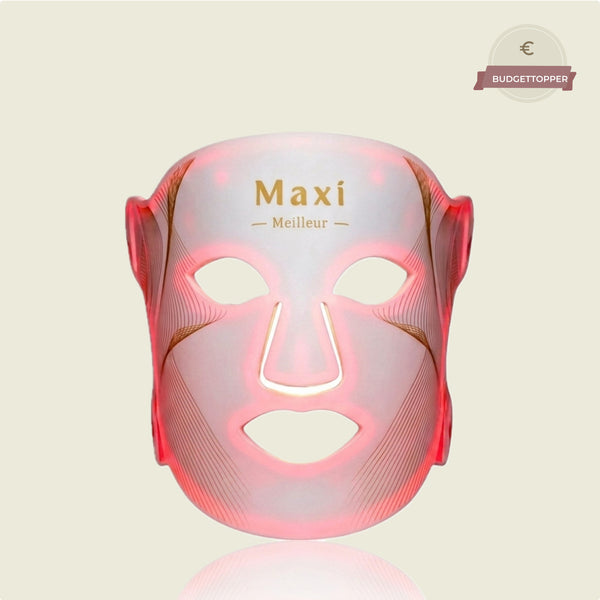
Nova Series - LED Mask White
- Entry-level model for high-quality LED therapy + 850 nm near infrared
- Simple routine for fresher and more even-toned skin
- Face + chin coverage
€129,00
Shop now
Save €30,00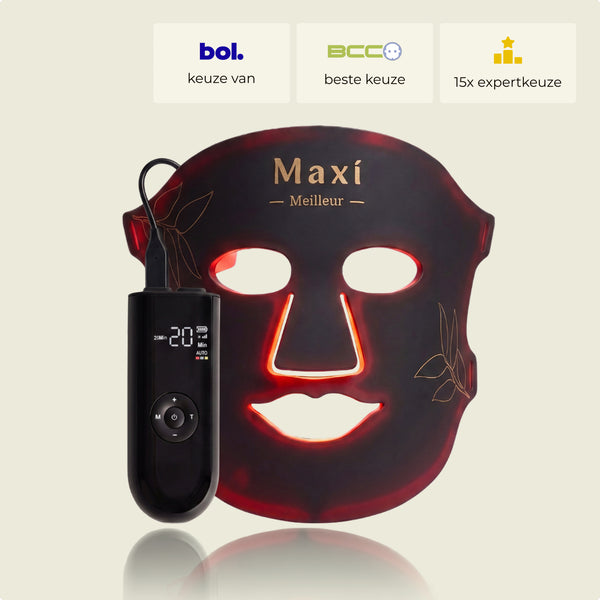
Pro Series - LED Mask
- Clinically & dermatologically tested by an independent lab
- High Density - Quattro LED chip technology + 850 nm near-infrared
- Face + chin coverage
€219,00€249,00
Shop now
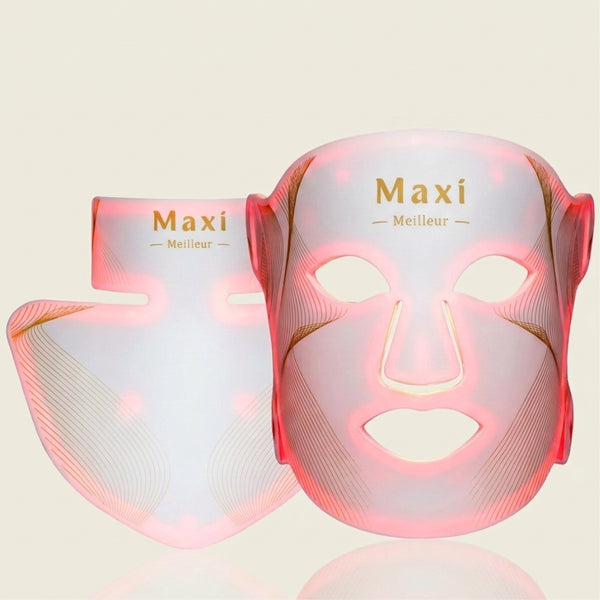
Nova Series - LED Mask White
- Entry-level model for high-quality LED therapy + 850 nm near infrared
- Simple routine for fresher and more even skin
- Face + neck + décolletage coverage
€229,00
Shop now
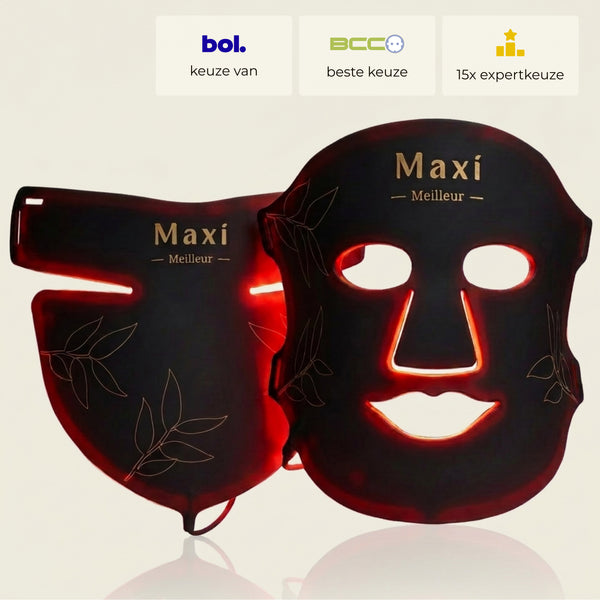
Pro Series - Full Glow Set Black
- Klinisch & dermatologisch getest door een onafhankelijk lab
- 680 High Density LEDs - Quattro LED-chip technologie + 850 nm nabij infrarood
- Gezicht + Hals + borst dekking
€339,00
Shop now


