


Table of contents
TrustScore 4.8 | 10,000+ customers
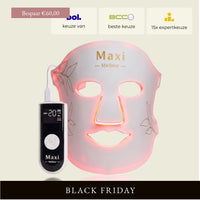
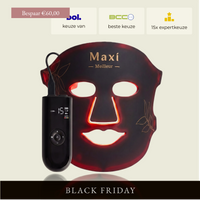

How effective are LED masks?
As a cosmetic addition to your skincare, an LED mask is effective: with regular use, it helps your skin look more even, smoother and fresher. How strong that effect is depends mainly on the wavelengths, the light intensity and how consistently you use the mask.
If you're unsure whether a mask like this can make a difference for your skin, it helps to know what research does and doesn't show, which factors make the difference and when you can expect less.
[banner-cta-1]
How effective is an LED mask according to research?
According to research, an LED mask is modestly effective: the light can help your skin look fresher, but the result builds up slowly over weeks and months of use. Research into light on the skin, known as photobiomodulation, is still very much in development, and the ideal dose has not yet been established (Salamon, 2025). The skin responds particularly well to red and near-infrared light when the settings are right (Avci et al., 2013).
An LED mask complements a good basic skincare routine with sun protection; it doesn't replace it (Salamon, 2025). So if you expect a quick or dramatic change, you'll be disappointed. Still unsure whether it's worth it? We set out the arguments for and against in our article on whether an LED mask is nonsense.
[product-cta-1]
What does an LED mask do?
An LED mask shines light with fixed wavelengths onto your face, without UV and without any procedure. Each light colour penetrates the skin differently and therefore has its own use. An LED mask for home use is not a treatment, but a skincare tool you use alongside your daily routine.
What is an LED mask good for? Mainly for the appearance of your skin. It can contribute to improved skin texture, helps fine lines and redness look less visible and contributes to a firmer appearance. Which of these goals an LED face mask supports best depends on the light colours it has.
What is the effect of LED light on your skin?
The effect of LED light on your skin differs per wavelength: the length of the light wave, expressed in nanometres (nm). The longer the wave, the deeper the light penetrates the skin. The table shows for each light colour what research looks at and which wavelength the Pro Series and the Nova Series from Maxi Meilleur use.
|
Light colour |
Wavelength |
What research looks at |
Pro Series |
Nova Series |
|
Red |
around 630 nm |
skin texture and the visibility of fine lines |
630 nm |
630 nm |
|
Near-infrared |
around 850 nm |
the interaction with deeper skin layers |
850 nm |
850 nm |
|
Blue |
415 to 460 nm |
the skin surface and blemish-prone skin |
415 nm |
460 nm |
|
Orange or yellow |
590 to 605 nm |
less extensively researched, used for a more even appearance |
605 nm (orange) |
590 nm (yellow) |
Red and near-infrared light are the most researched. In a controlled study with this combination, researchers saw smoother skin after a series of sessions, and participants were more satisfied with their complexion (Wunsch & Matuschka, 2014). Research like this is about the light itself, not about a specific mask.
[banner-cta-2]
Which factors determine how effective an LED mask is?
Five factors determine how effective an LED mask is for your skin. The first three lie in the device, the last two in how you use it.
- Wavelengths: Check whether the wavelengths are stated in nanometres and whether red and near-infrared are included. A mask that only mentions "red light" is hard to assess.
- Light intensity: The light strength, expressed in milliwatts per square centimetre (mW/cm²), determines how much light reaches your skin per session. Light that is too weak does little, but more light isn't automatically better. With adjustable intensity, you build up gradually: the Pro Series has three intensity levels, the Nova Series adjustable intensity and a timer.
- Coverage and number of LEDs: With more LEDs, the light falls more evenly across your face and chin, so there are fewer areas that receive little light. The Pro Series has 368 LEDs, the Nova Series 240. A good fit keeps the light close to your skin.
- Session length and frequency: Maxi Meilleur recommends 3 to 5 times a week, in sessions of 15 minutes. Using it more often or for longer doesn't automatically deliver more.
- Consistency: What you keep up for months counts for more than an intensive first week. A fixed moment, for example in the evening after cleansing, makes it easier to stick to the routine.
An LED mask is therefore only as effective as the weakest of these five factors. A mask with the right wavelengths but too few LEDs does less than you expect, and a good mask that stays in the cupboard does nothing. So when you choose, look at the device and at whether the routine fits your week.
When is an LED mask less effective?
An LED mask is less effective if you use it irregularly, if the light is too weak or unevenly distributed, or if you expect a result that falls outside cosmetic skincare. Deep wrinkles, scars or a skin condition call for a different approach: discuss them with your GP or a dermatologist.
Sometimes an LED mask isn't suitable either. If you take medication that makes your skin more sensitive to light, such as certain antibiotics, talk to your doctor first. If you have darker skin, start on a low intensity (Salamon, 2025). All Maxi Meilleur masks come with eye protection. A full overview of the situations in which it's better to wait can be found in our article on who shouldn't use a red light mask.
[product-cta-2]
Start your skincare routine with an effective LED mask
Maxi Meilleur develops LED masks based on clinically researched wavelengths. The Nova Series is the accessible entry-level model, the Pro Series the premium version with the most LEDs.
Every mask comes with a build-up schedule and personal 1-on-1 guidance, before and after your purchase. The Pro Series also includes an extensive manual and an e-book. That way, you know from your very first session what to expect and how to build up your routine. Discover which mask suits your skin and your week.
Sources
Avci, P., Gupta, A., Sadasivam, M., Vecchio, D., Pam, Z., Pam, N., & Hamblin, M. R. (2013). Low-level laser (light) therapy (LLLT) in skin: stimulating, healing, restoring. Seminars in Cutaneous Medicine and Surgery, 32(1), 41–52. https://pubmed.ncbi.nlm.nih.gov/24049929/
Salamon, M. (2025, October 21). Red light therapy for skin care. Harvard Health Publishing. https://www.health.harvard.edu/staying-healthy/red-light-therapy-for-skin-care
Wunsch, A., & Matuschka, K. (2014). A controlled trial to determine the efficacy of red and near-infrared light treatment in patient satisfaction, reduction of fine lines, wrinkles, skin roughness, and intradermal collagen density increase. Photomedicine and Laser Surgery, 32(2), 93–100. https://www.ncbi.nlm.nih.gov/pmc/articles/PMC3926176/
Frequently asked questions about effective LED masks
Need help?
Save €30,00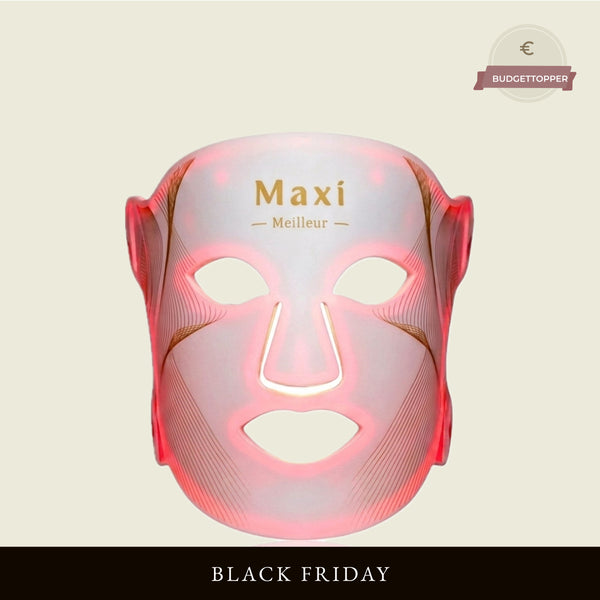
Nova Series - LED Mask White
- Entry-level model for high-quality LED therapy + 850 nm near infrared
- Simple routine for fresher and more even-toned skin
- Face + chin coverage
€99,00€129,00
Shop now
Save €70,00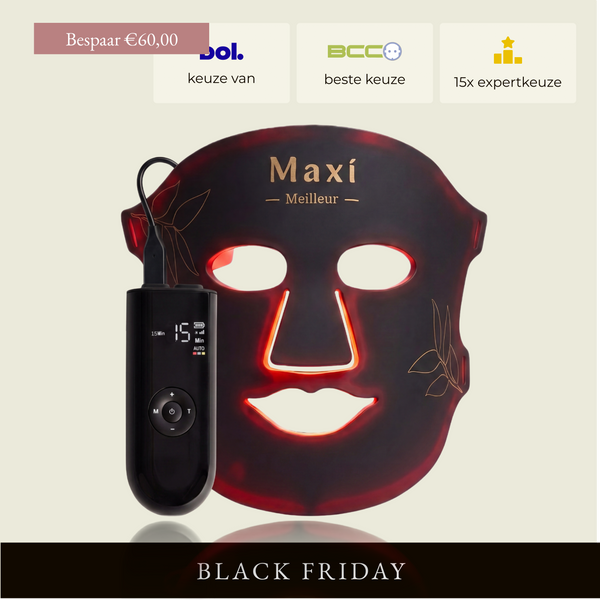
Pro Series - LED Mask
- Clinically & dermatologically tested by an independent lab
- High Density - Quattro LED chip technology + 850 nm near-infrared
- Face + chin coverage
€179,00€249,00
Shop now
Save €60,00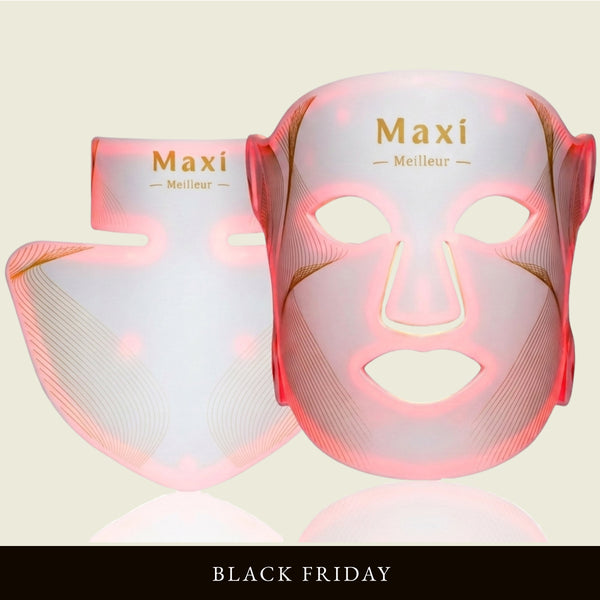
Nova Series - LED Mask White
- Entry-level model for high-quality LED therapy + 850 nm near infrared
- Simple routine for fresher and more even skin
- Face + neck + décolletage coverage
€189,00€249,00
Shop now
Save €70,00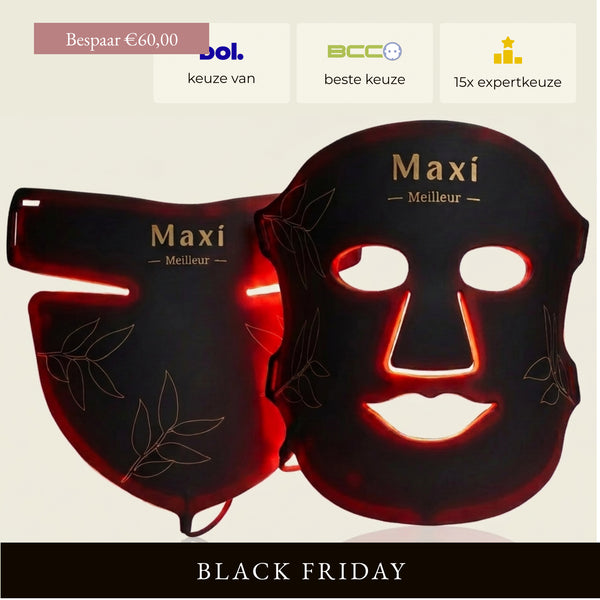
Pro Series - Full Glow Set Black
- Klinisch & dermatologisch getest door een onafhankelijk lab
- 680 High Density LEDs - Quattro LED-chip technologie + 850 nm nabij infrarood
- Gezicht + Hals + borst dekking
€289,00€359,00
Shop now


