


Table of contents
TrustScore 4.8 | 10,000+ customers
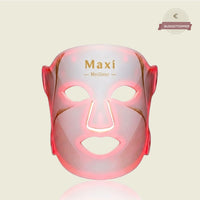
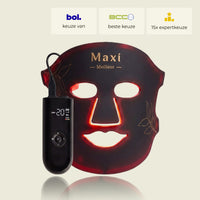

Professional LED mask: how does it differ from home use?
A professional LED mask differs from a regular mask for home use in its number of LEDs, wavelengths, adjustability and certification, not in the place where you wear it. The term is used for masks that beauticians use in the salon as well as for masks at that same level that you use at home.
In this article, you can read how to recognize a professional LED mask, how a session in the salon differs from a session at home and when home use reaches the same level.
[banner-cta-1]
What makes an LED mask professional?
An LED mask is professional when it meets four measurable features: a high number of LEDs with even coverage, several researched wavelengths, adjustable intensity and time, and demonstrable certification. So the word says something about the specifications, not about the user. The masks from the Pro Series are built on these four features and are used both at home and in beauty education.
Manufacturers sometimes slap the professional label on a mask with a handful of lights and a single color of light. That is why you check the four features below before you believe the word. A mask that scores on all four delivers a consistent amount of light to the skin of your whole face in every session, and that is exactly what a salon device does too.
How many LEDs does a professional LED mask have?
A professional LED mask has hundreds of LEDs, spread across the whole face including the chin and the zones next to the nose. The Pro Series mask has 368 LEDs; the salon mask Déesse Pro, which is sold in the Netherlands through distributors, has 770 LEDs according to the supplier's specifications. A cheap mask from a budget store usually comes nowhere near that.
The number only means something in combination with the distribution. LEDs that sit close together give an even light field without dark spots at the eyes, the corners of the mouth and the chin. A mask with many LEDs on the cheeks and few around the jawline leaves those zones unlit, and then the effect is missing exactly where fine lines show first.
Which wavelengths does a professional LED mask have?
A professional LED mask combines at least red and near-infrared light, often supplemented with blue and orange. Red light around 630 nm and near-infrared around 850 nm are the most studied in the literature: a controlled study with red and near-infrared light showed participants' skin looking smoother and fine lines becoming less visible (Wunsch & Matuschka, 2014).
Blue light around 415 nm has been studied in the scientific literature in relation to blemish-prone skin, and orange light around 605 nm is used for a fresher look.
Pay attention to how precise the specification is. A serious manufacturer states the exact wavelength in nanometers, such as 415, 605, 630 and 850 nm for the Pro Series. If it only says "red light" or "seven colors" without a number, you do not know whether the light falls within the researched range. More colors is not a plus when the wavelengths are unknown.
How adjustable is a professional LED mask?
A professional LED mask lets you set the light color, the intensity and the session length separately. The Pro Series works with four light modes, three intensity levels and a timer of 15, 20 or 30 minutes, operated with the wireless Smart Remote Pad Pro. That way, you start on a low setting and build up over a number of weeks, just as a beautician does in the salon.
A fixed setting without a choice is the biggest difference from cheap masks. They give everyone the same amount of light, while sensitive skin benefits from a calm start and an experienced user actually chooses a higher intensity. Adjustability makes the mask suitable for more skin types and for a routine you keep up for a long time.
Which certifications does a professional LED mask have?
A professional LED mask carries at least a CE marking and is RoHS tested; the Pro Series is CE, FCC and RoHS tested. CE means that the device meets the European product regulations, and RoHS restricts the use of harmful substances in the electronics. FCC and EMC are electronics labels for susceptibility to interference and say nothing about the safety for your skin.
Also look at the material that touches your skin. Food-grade silicone is soft, easy to clean and follows the contours of your face. A mask made of hard plastic presses on the forehead and the cheekbones, and during a session of fifteen minutes that quickly becomes uncomfortable. With the Pro Series, eye protection comes in the box as standard.
[product-cta-1]
What is the difference between LED light therapy in the salon and at home?
The difference between LED light therapy in the salon and at home lies in the power of the device, the guidance on the spot and how often you receive the light. A salon device is often a large panel or a cabin mask that delivers a high light intensity at a distance from the skin, while a mask for home use lies directly on the skin and works with a lower intensity that you repeat more often.
Both forms use the same wavelengths and the same principle: light is absorbed by the skin and the effects on the skin's appearance build up with repeated use (Avci et al., 2013). So the question is not which form is better, but which form suits your schedule, your budget and the regularity you can manage.
What does LED therapy for the face look like in the salon?
LED therapy for the face in the salon takes the form of a booked session under a panel or a fixed mask, often as the finishing touch of a facial treatment. The beautician cleanses the skin, chooses the light color and the intensity and stays nearby during the session. For a visible effect, salons usually recommend a series of sessions spread over several weeks.
The advantage is that an expert chooses the settings and assesses your skin. The disadvantage is that you depend on appointments: every session takes travel time and a spot in your calendar, and the costs add up with every visit. If you skip a few weeks, you lose the very regularity that the light needs.
What does LED therapy for the face look like at home with a mask?
LED therapy for the face at home takes place in sessions of fifteen minutes, three to five times a week, at a time that suits you. You cleanse your skin, put on the mask, choose the mode and the intensity on the remote control and do something else in the meantime. A build-up schedule helps you increase the intensity step by step.
The advantage is regularity: three short sessions a week are easier to keep up than a monthly salon visit. The disadvantage is that you are responsible yourself for consistency and for assessing your skin. With real skin concerns, a skin therapist or dermatologist remains the right person to consult.
[banner-cta-2]
When is an LED mask for home use just as good as the salon?
An LED mask for home use can be just as good as the salon when the mask uses the same researched wavelengths, covers the whole face evenly, is adjustable and is used consistently. A study with a 630 nm red light mask for home use showed that visible signs of skin aging gradually faded with two sessions a week over three months (Couturaud et al., 2023). Regularity therefore weighs more heavily than the power of a single session.
An honest note belongs here too. A salon device can deliver a higher light intensity per session than a mask that lies on the skin, and not every manufacturer of home masks publishes the light intensity in mW/cm²; for the Pro Series, that value is not documented either. So when you choose a mask, you look at the four measurable features from this article and at what users experience after a few weeks.
For a fresher, more even look and less visible fine lines, home use is often enough. If you are looking for guidance with a specific skin question or want to combine a session with a professional facial treatment, the salon remains a logical addition to your mask at home.
How do you choose a professional LED mask for home use?
You choose a professional LED mask for home use by checking five points before you order. A mask that scores on all five reaches the level you expect from a salon:
- Number and distribution of the LEDs: hundreds of LEDs, spread evenly across the face and chin.
- Wavelengths in nanometers: red around 630 nm and near-infrared around 850 nm, stated exactly by the manufacturer.
- Adjustability: a separate choice of light color, intensity and session length.
- Certification and material: CE and RoHS tested, food-grade silicone and eye protection included.
- Guidance after purchase: a build-up schedule and someone who answers your questions when you start.
If you are torn between an entry-level model and a premium mask, the choice depends on how far you want to go with adjustability and coverage. The overview of LED masks for home use puts the Nova Series as the entry-level model next to the Pro Series, so you see the specifications side by side right away. If you also want to include your neck and décolleté, there is a separate set for that with 680 LEDs in one system.
[product-cta-2]
Choosing a professional LED mask for home use
At Maxi Meilleur, we believe that a professional LED mask at home is worth just as much as the knowledge that comes with it. That is why we supply our masks to beauticians through wholesale, they are used in the beauty education of ROC Mondriaan, and every customer at home gets a build-up schedule and personal 1-on-1 guidance when starting a routine they can keep up.
Want to know which mask suits your skin and your routine? Contact us or take the skincare quiz on our site. We are happy to think along with you, without pushing you into anything and without promises we cannot keep.
Sources
The sources below are about red and near-infrared light in general and do not relate to a specific product.
Avci, P., Gupta, A., Sadasivam, M., Vecchio, D., Pam, Z., Pam, N., & Hamblin, M. R. (2013). Low-level laser (light) therapy (LLLT) in skin: stimulating, healing, restoring. Seminars in Cutaneous Medicine and Surgery, 32(1), 41-52. https://pmc.ncbi.nlm.nih.gov/articles/PMC4126803/
Couturaud, V., Le Fur, M., Pelletier, M., & Granotier, F. (2023). Reverse skin aging signs by red light photobiomodulation. Skin Research and Technology, 29(7), e13391. https://doi.org/10.1111/srt.13391
Wunsch, A., & Matuschka, K. (2014). A controlled trial to determine the efficacy of red and near-infrared light treatment in patient satisfaction, reduction of fine lines, wrinkles, skin roughness, and intradermal collagen density increase. Photomedicine and Laser Surgery, 32(2), 93-100. https://doi.org/10.1089/pho.2013.3616
Frequently asked questions about a professional LED mask
Need help?
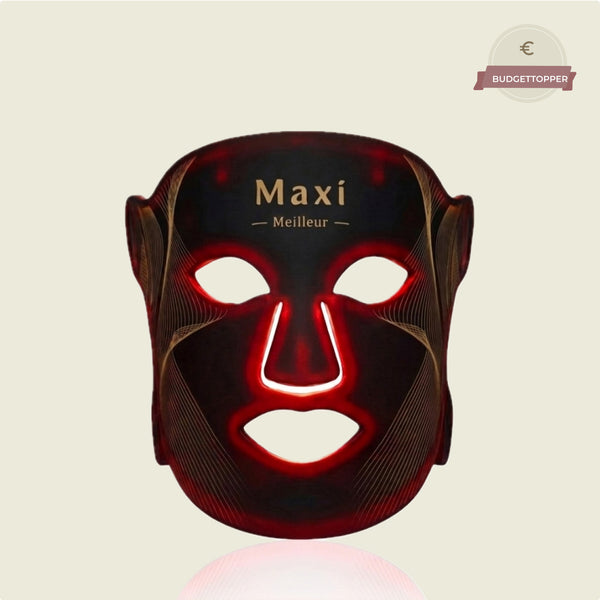
Nova Series - LED Mask Black
- Entry-level model for high-quality LED therapy + 850 nm near infrared
- Simple routine for fresher and more even-toned skin
- Face + chin coverage
€129,00
Shop now
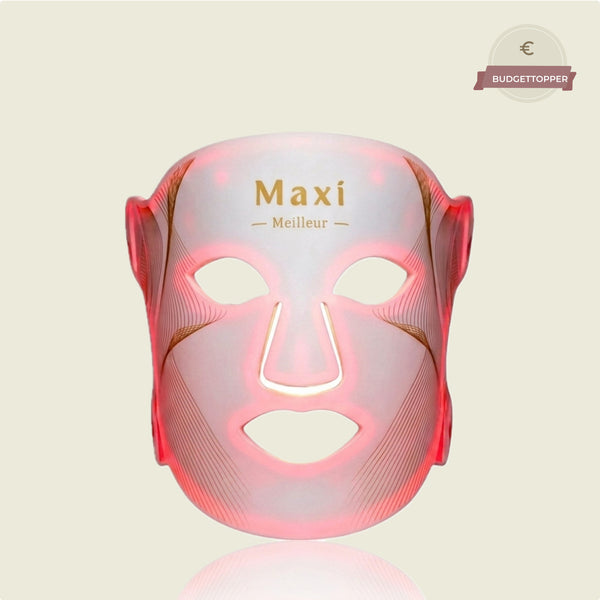
Nova Series - LED Mask White
- Entry-level model for high-quality LED therapy + 850 nm near infrared
- Simple routine for fresher and more even-toned skin
- Face + chin coverage
€129,00
Shop now
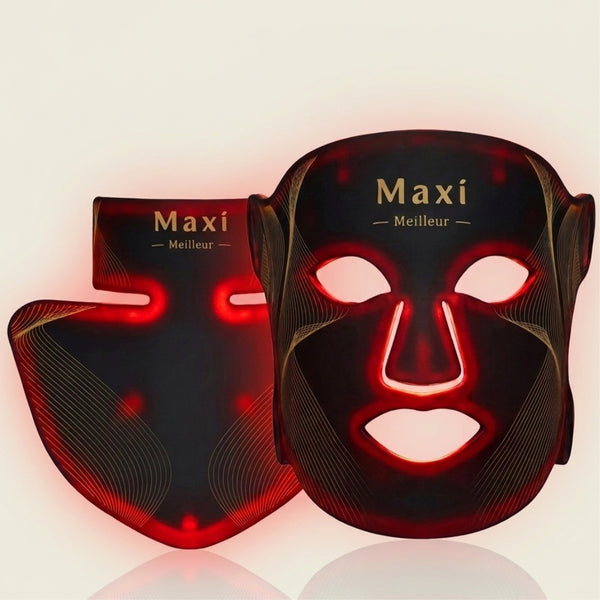
Nova Series - LED Mask White
- Entry-level model for high-quality LED therapy + 850 nm near infrared
- Simple routine for fresher and more even skin
- Face + neck + décolleté coverage
€229,00
Shop now
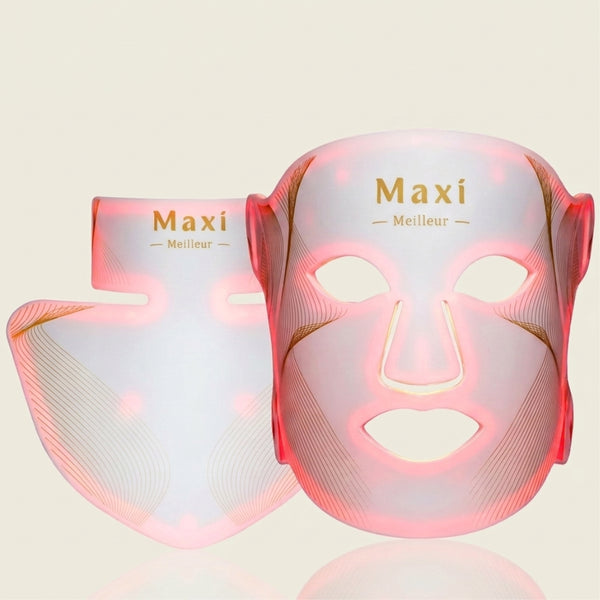
Nova Series - LED Mask White
- Entry-level model for high-quality LED therapy + 850 nm near infrared
- Simple routine for fresher and more even skin
- Face + neck + décolletage coverage
€229,00
Shop now
Save €30,00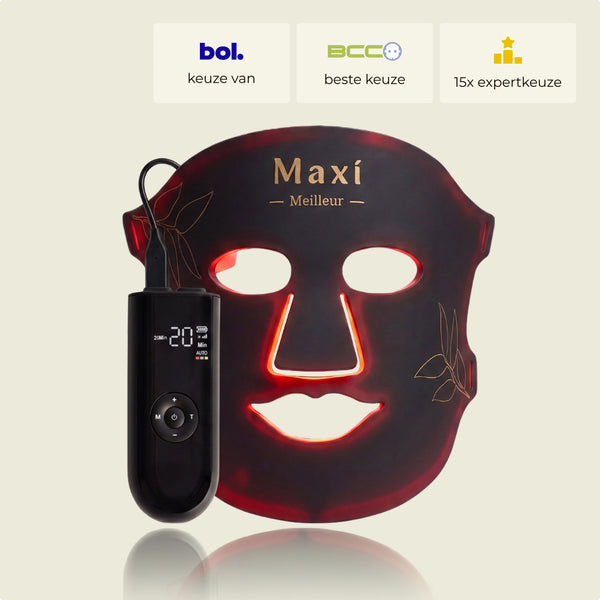
Pro Series - LED Mask
- Clinically & dermatologically tested by an independent lab
- High Density - Quattro LED chip technology + 850 nm near-infrared
- Face + chin coverage
€219,00€249,00
Shop now
Save €30,00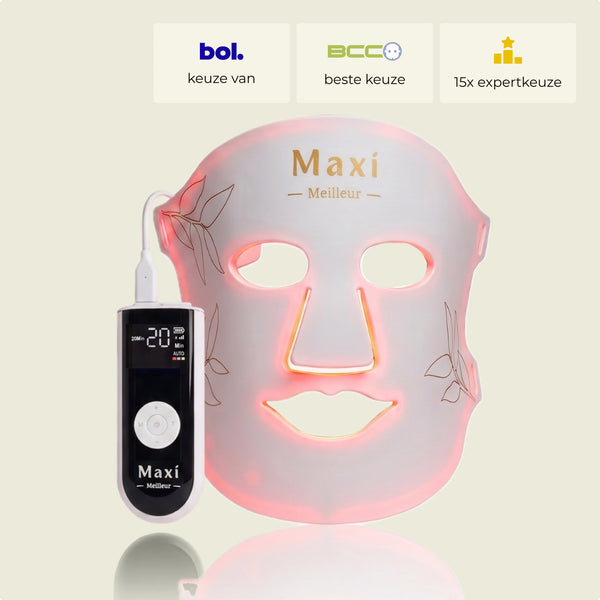
Pro Series - LED Mask White
- Clinically & dermatologically tested by an independent lab
- High Density - Quattro LED chip technology + 850 nm near-infrared
- Face + chin coverage
€219,00€249,00
Shop now
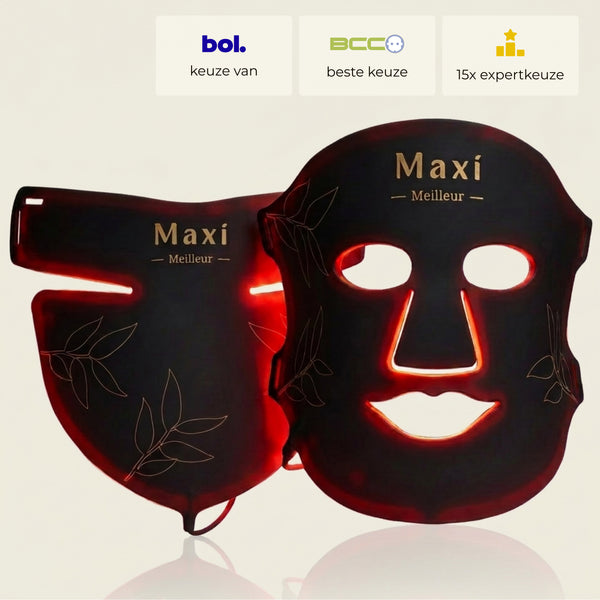
Pro Series - Full Glow Set Black
- Klinisch & dermatologisch getest door een onafhankelijk lab
- 680 High Density LEDs - Quattro LED-chip technologie + 850 nm nabij infrarood
- Gezicht + Hals + borst dekking
€339,00
Shop now
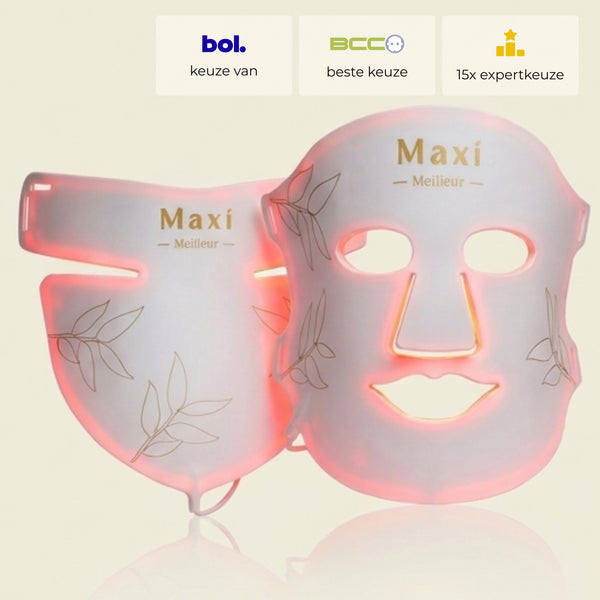
Pro Series - Full Glow Set White
- Clinically & dermatologically tested by an independent lab
- 680 High Density LEDs - Quattro LED chip technology + 850 nm near-infrared
- Face + Neck + chest coverage
€339,00
Shop now


